
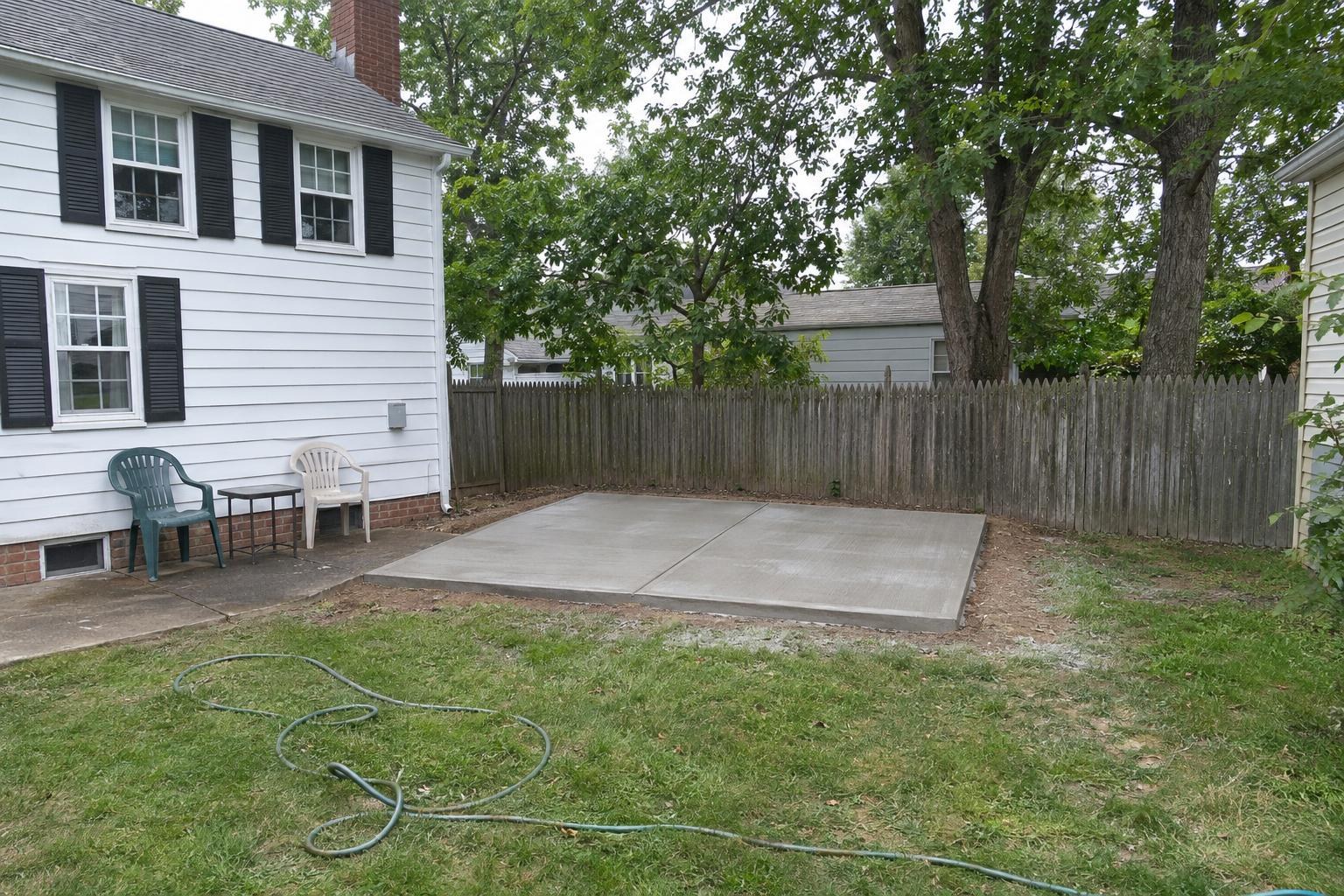
Annapolis sits on a mix of clay and sandy loam, with a water table that rises fast near the Severn and the Chesapeake. That matters more than most homeowners realize when they're pricing a driveway or a patio. A slab poured over wet clay without proper sub-base prep will heave and crack within a few winters. A contractor who's worked this county knows to over-excavate and bring in 4 to 6 inches of compacted stone before any concrete goes down, especially on lots near Eastport or along the water in West Annapolis where the soil holds moisture longer.
What the ground and the weather do to the work
Maryland gets somewhere between 30 and 40 freeze-thaw cycles a winter. Water gets into hairline cracks, freezes, expands, and widens them. That's why driveways and walkways here need air-entrained concrete, usually a 4,000 psi mix with 5 to 7 percent air content, not the standard mix you'd use somewhere with milder winters. If a contractor doesn't bring up air entrainment unprompted, ask about it. It's not an upsell. It's the difference between a driveway that lasts 25 years and one that's spalling by year eight.
Summer is its own problem. Concrete poured on a 95-degree July afternoon cures too fast on the surface while the interior is still soft, and that leads to surface cracking and dusting. A contractor who knows the area will pour early in the morning in summer, or push for fall and spring windows when they can. That's a scheduling decision, not a preference, and it tells you whether they're thinking about the finished product or just getting the truck emptied.
Licensing, insurance, and the permit process
Anne Arundel County requires a permit for most new concrete work tied to a structure, like a foundation, a porch, or a driveway apron that connects to a county road. Flatwork like a simple patio sometimes falls under a smaller threshold, but anything touching setbacks, drainage, or the right-of-way usually gets inspected. A legitimate contractor pulls the permit themselves or walks you through exactly what you need to file. If someone tells you permits are a waste of money or that they can "skip it this time," that's your answer right there. Unpermitted work can come back to bite you at resale, especially in older neighborhoods like Murray Hill where lot lines and easements aren't always where people assume.
Ask for their Maryland Home Improvement Commission license number and confirm it's active. Ask for proof of liability insurance and workers' comp. A sub-crew without workers' comp is a liability that lands on you if someone gets hurt on your property.
What should actually be in the quote
A real bid names the slab thickness, usually 4 inches for a patio or walkway and 4 to 6 inches for a driveway that'll see a car's full weight. It names the reinforcement, rebar on a grid versus wire mesh, and for driveways rebar is the better call since mesh tends to sink to the bottom of the pour if nobody holds it up during placement. It names the control joint spacing, roughly every 8 to 10 feet for a 4-inch slab, cut within the first 24 to 48 hours so the concrete cracks where you want it instead of wherever it feels like. If the quote just says "pour concrete driveway, $X," you don't know what you're buying.
Ask how long before you can walk on it and how long before you can park a car on it. Concrete reaches enough strength to walk on in about 24 to 48 hours, but it needs a full 28 days to cure to its rated strength, and a driveway shouldn't see a vehicle before about a week at the earliest. A contractor who tells you "drive on it tomorrow" either doesn't know better or is telling you what you want to hear.
Red flags worth walking away from
- A bid that's noticeably lower than two or three others with no explanation. Concrete, rebar, and labor cost roughly the same for everyone in the county. A big gap usually means a thinner slab, mesh instead of rebar, or no sub-base prep.
- Cash only, no written contract, no mention of a permit.
- No answer on grading and drainage. Water has to go somewhere, and on a lot with poor fall toward the street, a flat patio becomes a puddle after the first downpour. A contractor should talk about slope, usually a minimum of 1/8 inch per foot away from the house, before they talk about color or finish.
- Vague on curing time, or pushing to pour on a day with rain forecast within 24 hours.
- No references for work that's at least a few years old. Fresh concrete always looks good. You want to see how it held up through a couple of winters.
Older streets versus newer subdivisions
A job in a neighborhood built in the 1950s or 60s, like parts of West Annapolis or Eastport, often runs into old utility lines, buried oil tanks, or a sidewalk apron that doesn't match current county standards. That means more unknowns before the pour, and a good contractor will tell you that upfront rather than discovering it with the excavator. A job in a newer subdivision out toward Crofton or Odenton is usually more straightforward on the ground, but you're more likely to be dealing with an HOA that has its own rules on driveway width, color, or even whether stamped concrete is allowed on the front elevation. Check with the HOA before you sign anything. Redoing a driveway because it's half an inch over the allowed width is an expensive mistake.
None of this is complicated once you know what to ask. Get the mix spec, the joint layout, the permit status, and a couple of references that are a few winters old, and you'll weed out most of the bad bids on your own. If you want someone to walk through your specific lot and tell you straight what it needs, that's our concrete contractor work in Annapolis and the surrounding towns.