What We Do

Services

Here's the full rundown of what we pour, repair and finish.

Home › Services

Everything we take on

Every job below is one we do ourselves across Annapolis.

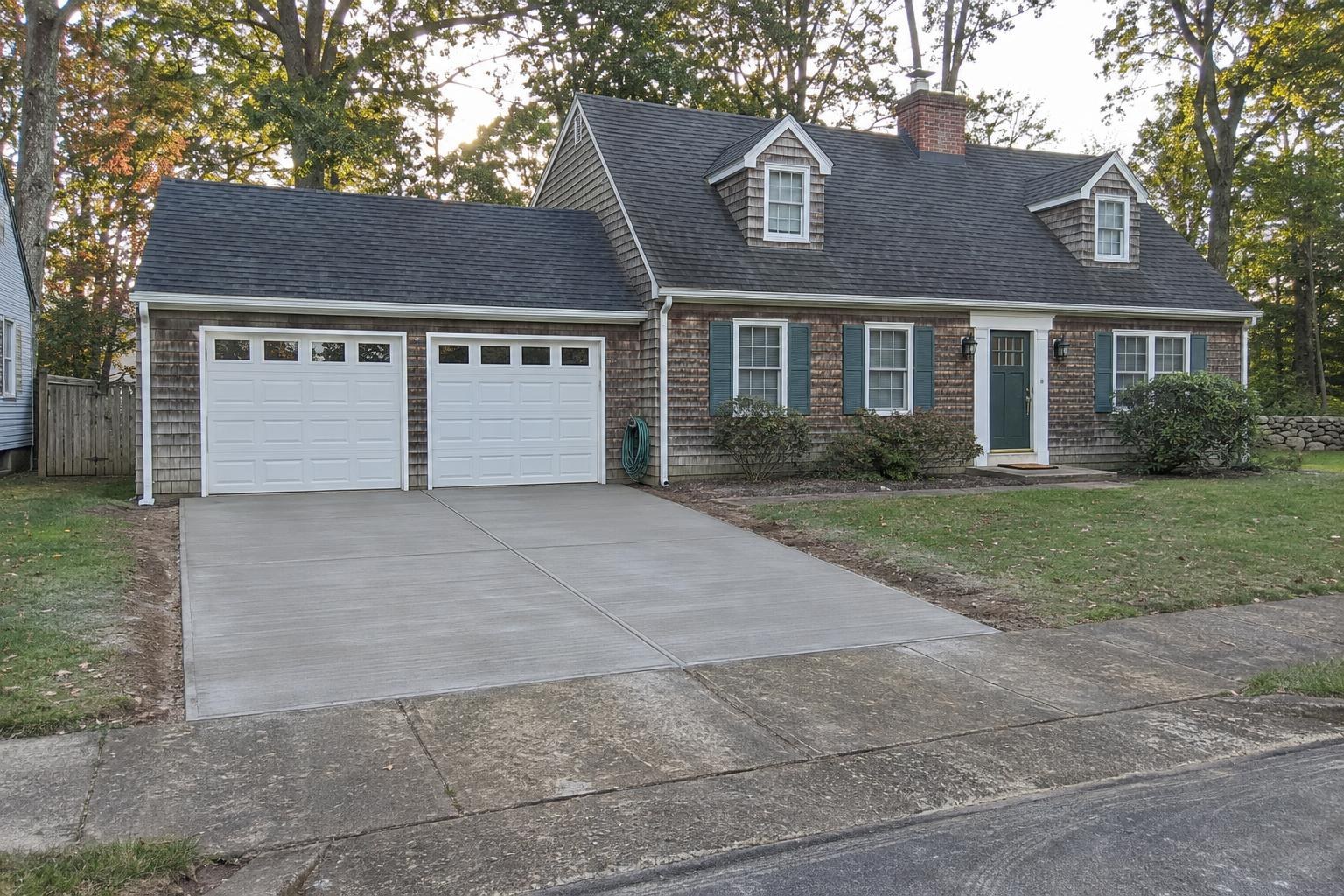
Concrete Driveways

We pour driveways 4 to 6 inches thick depending on whether you're parking cars or a loaded truck, with rebar or wire mesh set to keep the slab from pulling apart at the joints. We grade the base so water sheets off toward the street instead of pooling at your garage door.

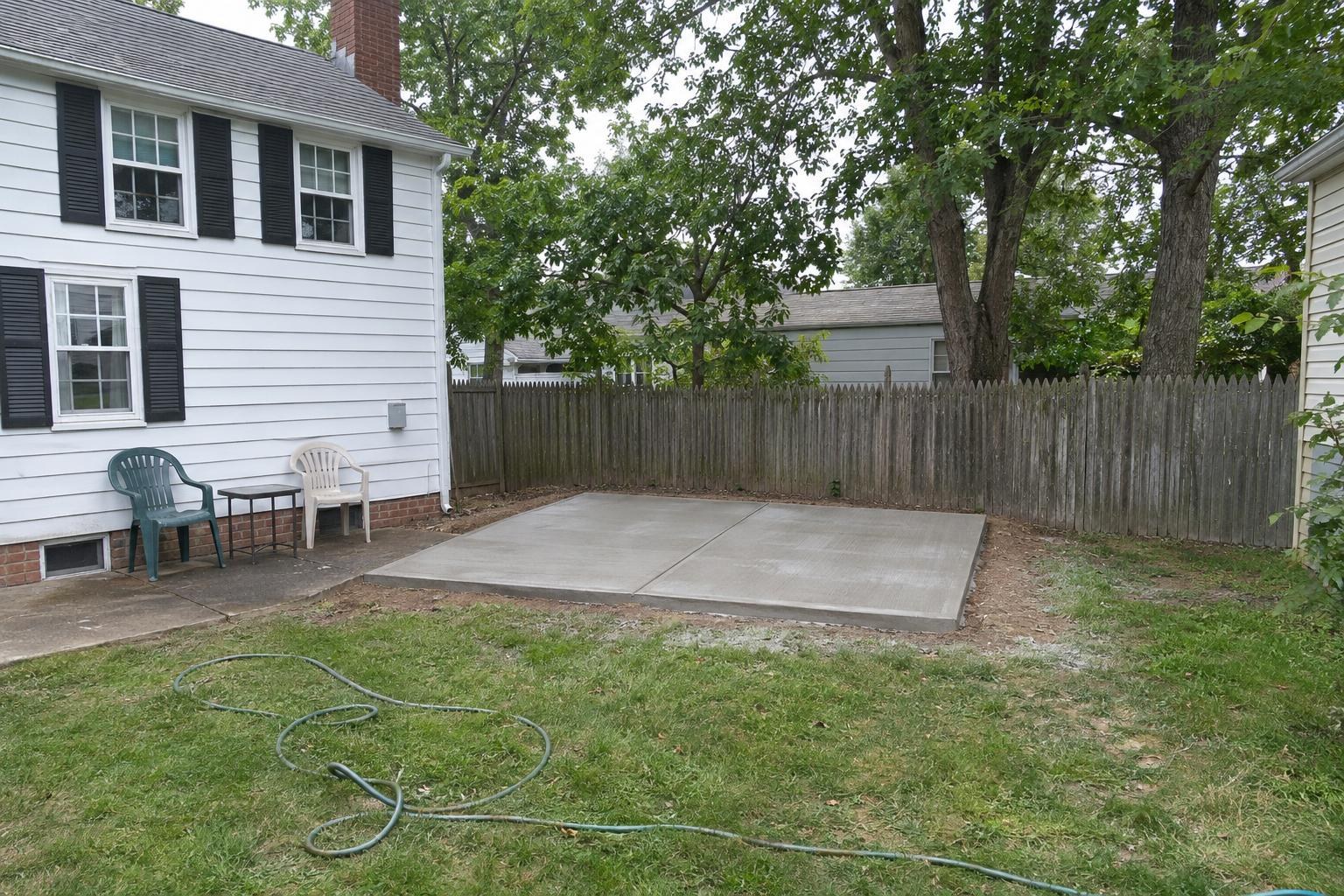
Concrete Patios

A patio slab gets a broom finish or exposed aggregate, your call, but either way it needs a slope of about a quarter inch per foot so it doesn't hold water against the house. We set control joints every 8 to 10 feet so any cracking happens in a straight line you don't notice.

Stamped Concrete

Stamped concrete gives you the pattern of flagstone, brick or slate without the joints where weeds and ants move in. We color it through the mix and seal it after cure, which is what keeps the color from going chalky after a few summers.

Concrete Repair

Cracked slabs, sunken sections, spalled surfaces, we can usually fix these without a full tear-out. If the base underneath has washed out, we mudjack or replace the section rather than patch over a problem that'll just come back.

Concrete Sidewalks & Walkways

We pour walkways level and even, with enough slope to shed water but not so much you feel it underfoot. Panel sizes and control joints follow the same rules as a driveway, just scaled down.

Concrete Foundations & Slabs

Garage slabs, shed pads, and small foundation work, poured to the depth your soil actually calls for. Anne Arundel clay moves more than sandy soil, so we don't use a one-size footing depth for every lot.

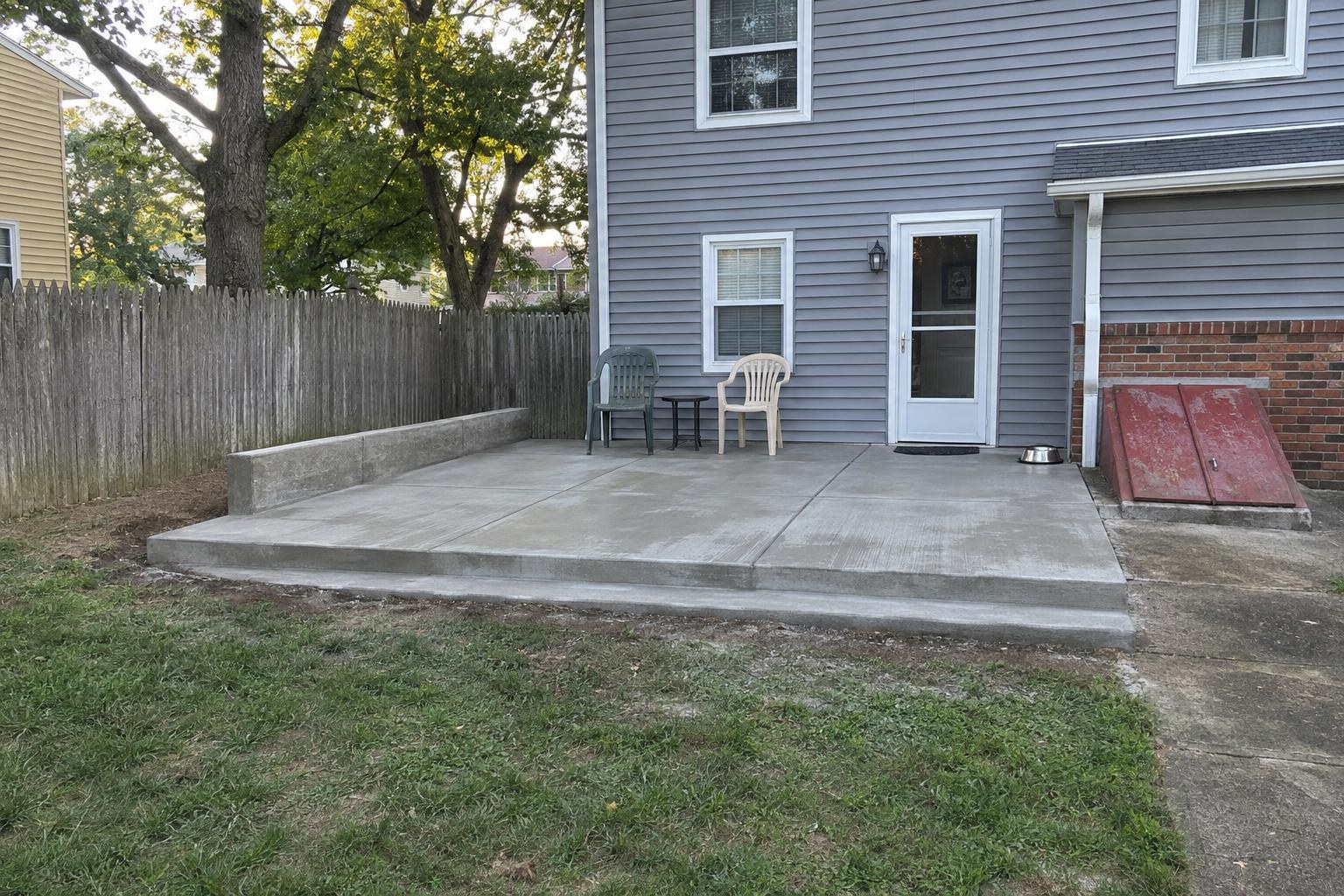
Concrete Steps & Porches

Steps get poured with the same rebar schedule as a slab, tied in so the whole structure moves together instead of the top step cracking off on its own. We match the rise and run to code so nobody trips going out the front door.

Exposed Aggregate Concrete

We wash back the surface paste after the pour to expose the stone underneath, which gives you more traction than a plain broom finish. It holds up well on pool decks and front walks where a slick surface is a real problem.

Concrete Removal & Demolition

Old slabs, cracked driveways, broken patios, we break it up, haul it off, and either recycle it as base material or get it off the property entirely. This usually happens before a replacement pour, but we'll do it as a standalone job too.

Retaining Walls & Masonry

Beyond flatwork, we build segmental and poured retaining walls where a slope is eroding or a yard needs leveling out. We also handle brick and block repair, tuckpointing, and small masonry jobs that come up around a concrete project.

How It Works

Four steps, and no surprises in any of them.

01

We come and look

You tell us what you want doing, we look at what is actually there, and we ask the awkward questions early.

02

You get a price

In writing, itemised, free. If something might add cost later we flag it now rather than at the end.

03

We do the work

Same crew throughout. We cover your floors, keep the dust down and tidy up before we leave each day.

04

We walk it with you

You point out anything you are not happy with and we fix it before the invoice, not after.

Where We Work

All of this, across Annapolis, MD

Available throughout Annapolis and the surrounding towns listed below.

Annapolis, MD
Washington, MD
Baltimore, MD
Columbia, MD
Waldorf, MD
Silver Spring, MD
Glen Burnie, MD
Bowie, MD
Severna Park, MD
Crofton, MD
Arnold, MD
Edgewater, MD
Common Questions

Things worth asking

Questions that tend to come up once a project is underway.

Do I need a permit for a new driveway or patio?
Many jurisdictions require a permit for new concrete driveways, especially where they connect to a public street, while a simple patio replacement often doesn't need one. Anne Arundel County and the City of Annapolis each have their own thresholds, so it's worth confirming before the pour date is set.
How long does a typical concrete pour take?
A standard driveway or patio pour usually takes one day for the actual concrete work, with site prep and form-setting taking one to two days before that. Decorative finishes like stamping or exposed aggregate add time on pour day itself since the pattern has to go in before the concrete sets.
Can you work with a fixed budget?
Yes, a concrete contractor can adjust thickness, reinforcement type, or finish to fit a target budget, though going too thin on a driveway that sees vehicle traffic isn't a place to cut corners. The honest answer is usually to shrink the square footage before shrinking the specs.
Do you offer any kind of guarantee on the work?
Workmanship warranties on concrete typically cover issues tied to the installation itself, like improper curing or joint placement, for a set period after the pour. Cracking from normal concrete shrinkage, ground movement, or a homeowner driving on it too soon usually isn't covered, which is why curing time matters.
Who will I be dealing with during the project?
On most concrete jobs, a single crew lead handles day-to-day communication, schedule changes, and any questions that come up on site. That's usually the same person who was on-site for the original estimate, which keeps the job's details from getting lost between office and crew.
What's the difference between rebar and wire mesh reinforcement?
Rebar is set on chairs to hold it up off the ground mid-slab, giving stronger reinforcement for driveways and anything that carries vehicle weight. Wire mesh is lighter duty and more common on patios and walkways, though it has to be pulled up into the slab during the pour or it does nothing sitting at the bottom.
Can I stay in my house during a concrete driveway or patio replacement?
Yes, living in the house during a concrete replacement is normal, though the driveway itself is unusable for a few days after the pour. Curing to walk on typically takes 24 to 48 hours, and a driveway usually requires 7 days before it's safe for vehicle weight, longer in cold weather.
What do I need to do to get my property ready before the crew arrives?
Clearing cars, patio furniture, and anything stored near the work area gives the crew room to set forms and stage equipment. Sprinkler lines, buried cables, and low-hanging branches near the pour site are worth pointing out ahead of time since they affect excavation.
What happens if you hit something unexpected once digging starts?
Old buried concrete, tree roots, or a septic line in the wrong spot are the most common surprises once excavation starts on a concrete job. These usually mean a short pause to figure out the fix and sometimes a change order, rather than abandoning the plan altogether.
How do I take care of new concrete once it's poured?
New concrete has to cure for about 7 days before it takes vehicle weight, and sealing it every few years helps resist salt, oil stains, and freeze-thaw damage. Avoid de-icing salt the first winter if possible, since young concrete is more vulnerable to the scaling it causes.

Not sure what you need?

Describe the problem and we will tell you what it probably is. No obligation.

Call (301) 507-2969